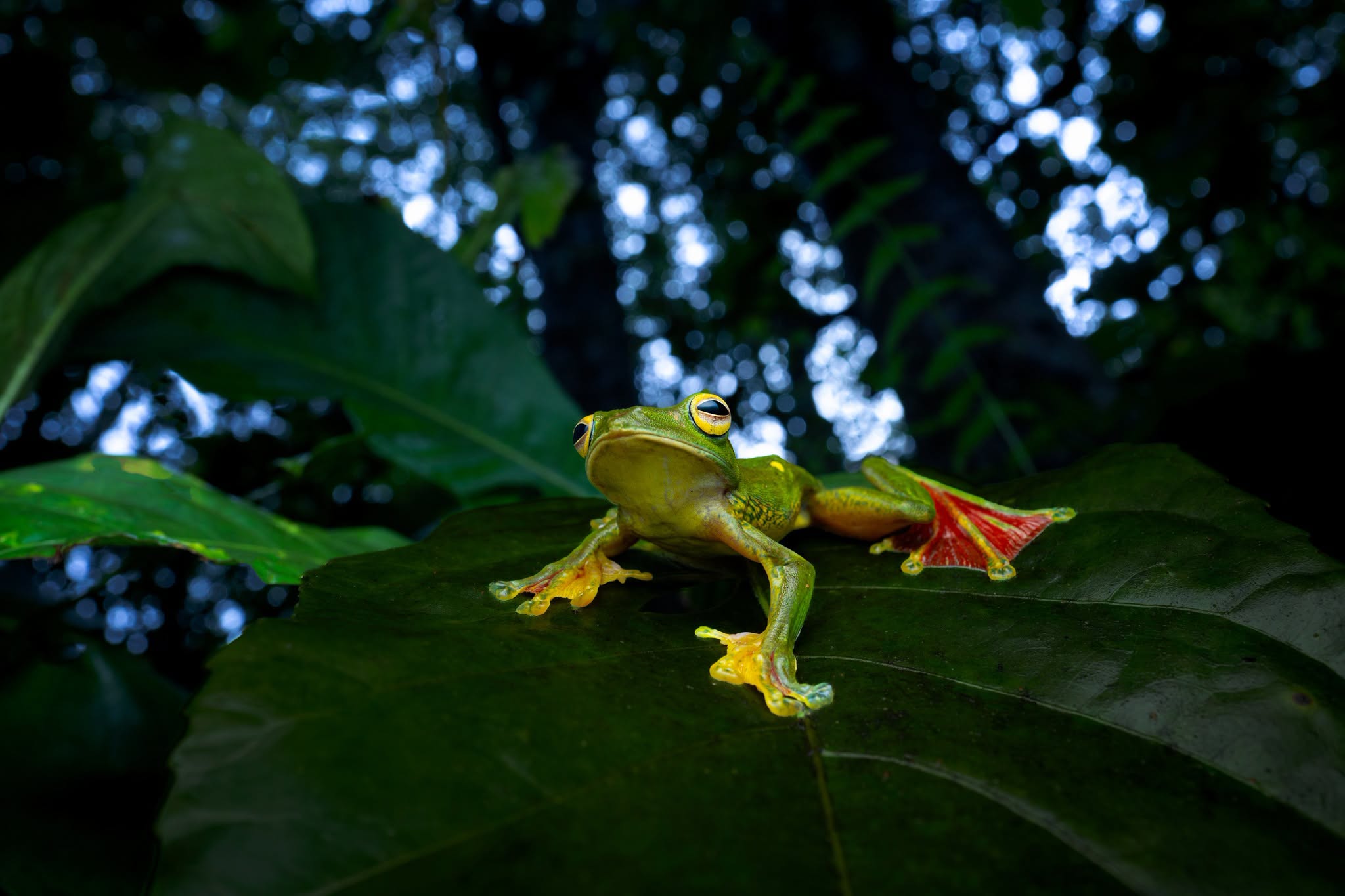
In a rain-soaked forest, darkness is rarely silent. Water tumbles over rocks, insects pulse in the undergrowth, and somewhere beneath the wet leaves, a frog calls.
For most people, it is simply part of the night. For Dr S. D. Biju, it may be the voice of a species that science has not encountered for more than a century. This sense of possibility lies at the heart of Lost! Amphibians of India, a nationwide conservation initiative led by Dr Biju and headquartered at the Systematics Lab, University of Delhi. Formally launched in November 2010, the project brought together researchers, conservation organisations, students and nature enthusiasts to search for amphibians that had disappeared from scientific records.
Around 50 species – including frogs and caecilians, had not been recorded in the wild for periods ranging from less than two decades to nearly 170 years. Some were known only from preserved specimens and fading descriptions written during the colonial era. The central question behind the project was both simple and urgent:
Were these species truly extinct, or had we simply stopped looking carefully enough?
Life on earth

Life happened on earth 3.8 billion years back and human life came in much later. In spite of scientific progress, more than 80% of species still remain undiscovered and nameless. We have discovered about 1.3 million species on land and in water. So what remains undiscovered is a huge portion of our biodiversity. Against the background of still unknown richness of biodiversity, this century has witnessed rapid extinctions of species. Millions of species are disappearing directly as a result of human destruction of natural habitats.
There are about 8,698 species of known amphibians. Among vertebrates, they are the third largest group – after fishes and birds. Many amphibians are yet to be discovered and many aspects of the known species are unknown. On the express road to discoveries, descriptions and conservation action is an urgent need.
Lost Amphibians of India: A search filled with hope
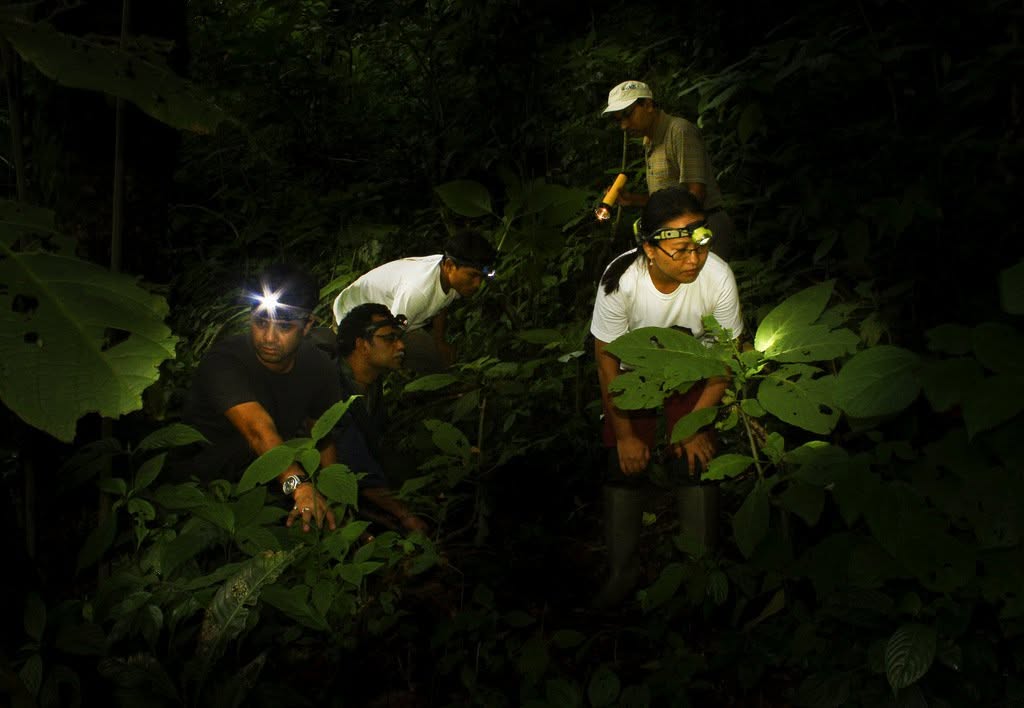
Looking for a “lost” amphibian is very different from searching for a large mammal. Many frogs are active only during a short period of the monsoon. Some emerge for just a few nights each year, while others remain hidden beneath leaf litter, inside reeds, under rocks or beside fast-flowing forest streams.
Their calls may be the first clue to their presence. The search therefore demanded patience, field experience and an intimate understanding of the landscape. Teams travelled through rainforests, mountain streams and remote wetlands, often working after sunset in heavy rain – the very conditions in which amphibians are most active. The initiative was never only about rediscovering individual species. It was also an effort to rebuild knowledge. Finding a frog again could help scientists study its habitat, behaviour, distribution and conservation needs. As Dr Biju explained, a species must first be found before meaningful steps can be taken to protect it.
Remarkable returns
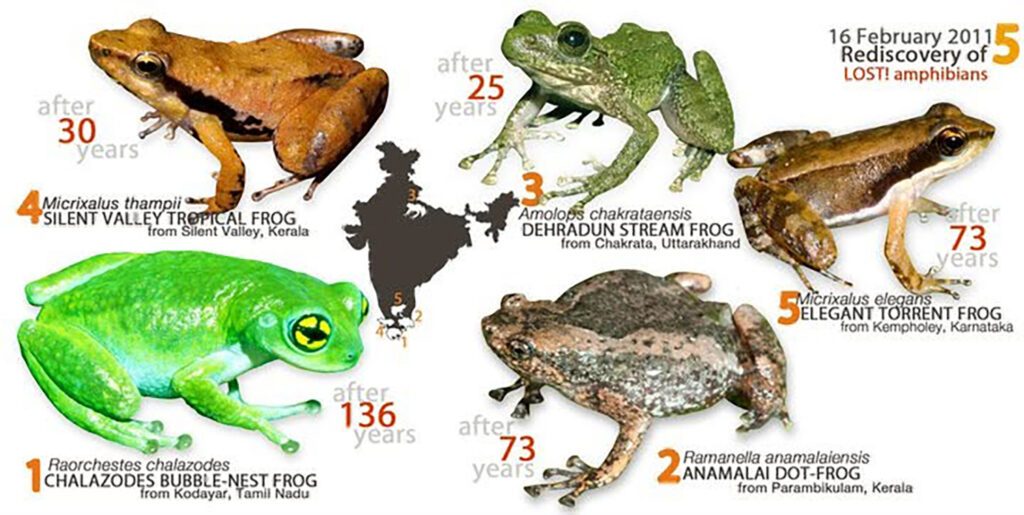
Copyrights: Prof. S. D. Biju, Lost Amphibians of India
The expeditions soon produced extraordinary results. Five frog species were reported rediscovered during the early phase of the initiative. Among them was the Chalazodes bubble-nest frog, Raorchestes chalazodes, which had not been reliably recorded since 1874. After 136 years away from the scientific record, the tiny fluorescent-green frog was found again in the Upper Kodayar region of Tamil Nadu. Its secretive behaviour—resting inside reeds during the day and becoming active at night—helped explain how it had remained undetected for so long.
Other rediscoveries included the Dehradun stream frog, the Silent Valley tropical frog, the elegant torrent frog and the Anamalai dot frog. Each return carried its own story, but together they delivered one powerful message: absence from our records does not always mean absence from nature. Sometimes, it means that we have not searched in the right place, at the right time or with enough care.
The discovery of Indosylvirana caesari
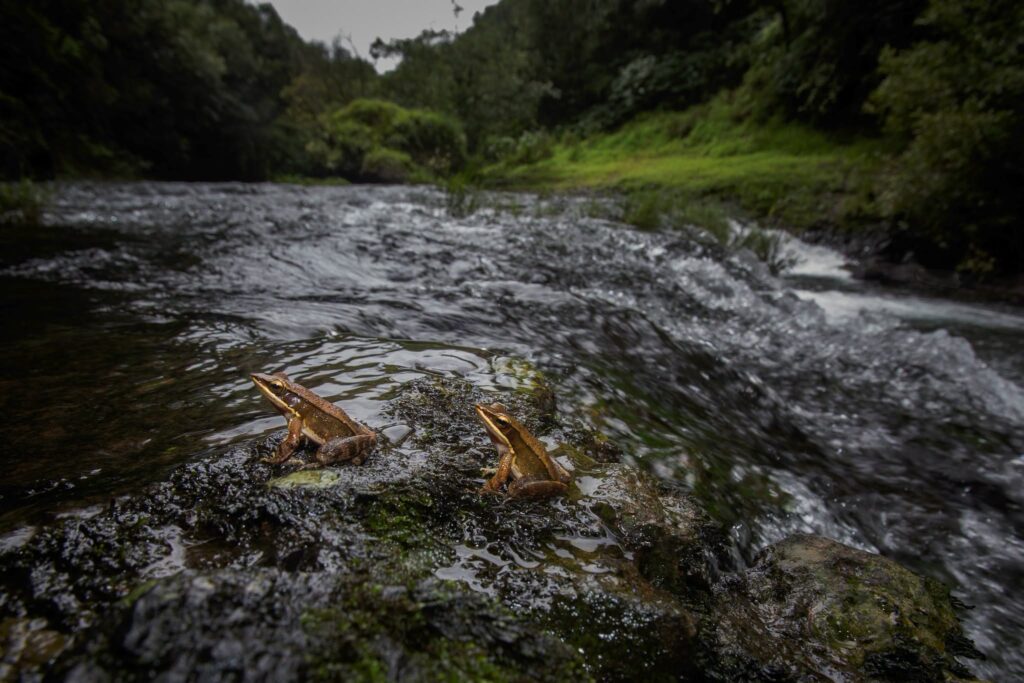
The wider scientific work associated with Dr Biju and the exploration of India’s overlooked amphibian diversity also led to the identification of several species that were new to science. Among them was the beautiful Maharashtra golden-backed frog, originally described in 2014 as Hylarana caesari and subsequently placed in the genus Indosylvirana as Indosylvirana caesari.
The species was documented from the northern Western Ghats of Maharashtra, with its type locality at Humbarli near Koyna in Satara district. It is associated with rocky streams in the Western Ghats and has also been recorded in the Sindhudurg region, including areas around Amboli. The frog was named caesari in honour of conservation photographer Dr Caesar Sengupta, recognising his dedication and support for amphibian conservation and the Lost Amphibians of India initiative.
Its discovery demonstrated that the Western Ghats still shelter amphibian diversity that science is only beginning to understand. It also showed that important species can survive surprisingly close to human settlements while remaining scientifically unrecognised. Scientific names may change as researchers gain a better understanding of the evolutionary relationships between species. But the frog’s name continues to carry a story of collaboration—between science, conservation and photography—and of a shared commitment to giving India’s lesser-known wildlife the attention it deserves.
Why amphibians matter
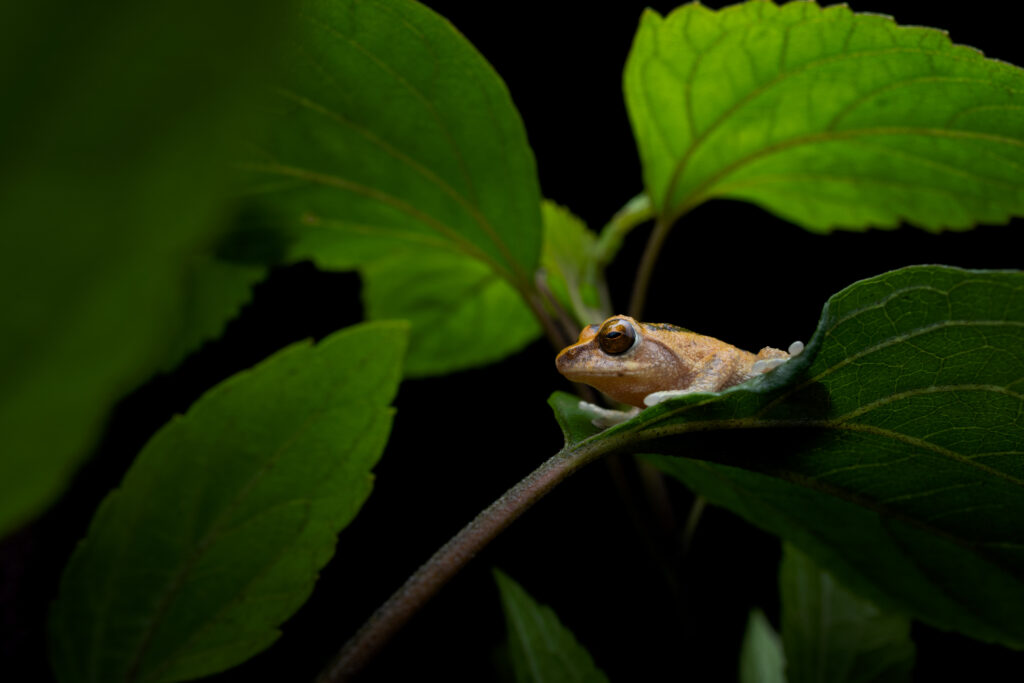
Amphibians are among the most sensitive inhabitants of an ecosystem. Their lives are closely connected to clean water, seasonal rainfall, forest cover and stable microhabitats. When streams are polluted, wetlands disappear or forests are fragmented, amphibians are often among the first creatures to be affected.
Yet they rarely receive the attention given to tigers, elephants or rhinos. Their small size should not be mistaken for small importance. Frogs and other amphibians help control insect populations, form part of complex food webs and contribute to the ecological balance of forests and freshwater habitats. Their decline can signal that an ecosystem is changing long before the damage becomes obvious to us. Protecting amphibians therefore means protecting far more than a single species. It means safeguarding streams, forests, watersheds and the many communities—human and wild—that depend upon them.
Rediscovery is only the beginning
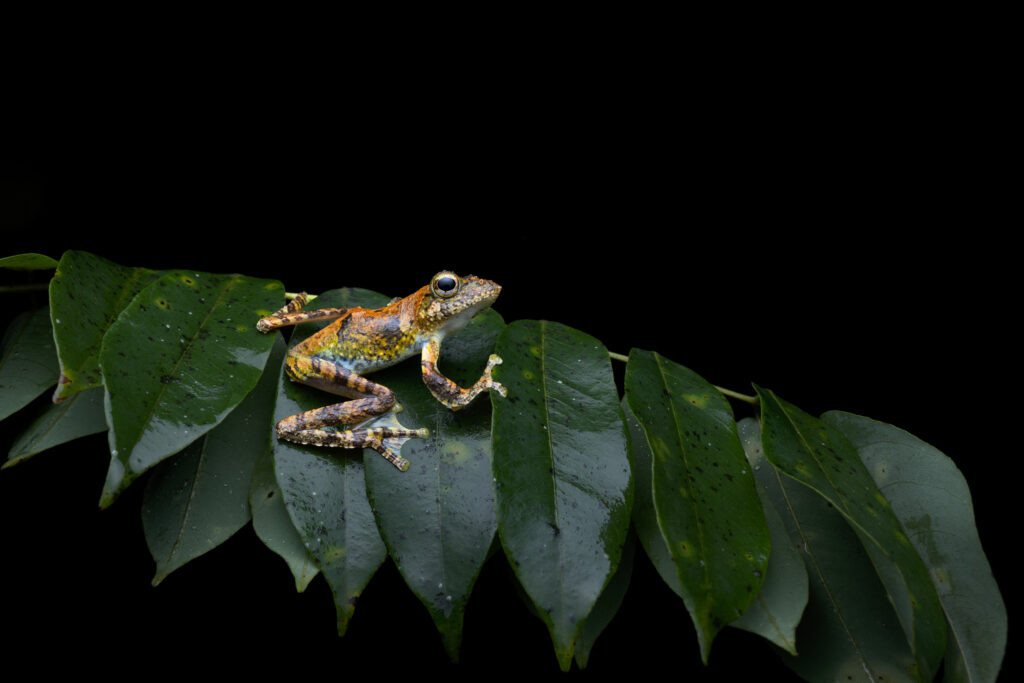
Finding a lost species is a moment of celebration, but rediscovery alone does not guarantee survival. A frog may return to scientific knowledge only to be found in a tiny patch of threatened habitat. Its forest may be under pressure from development, pollution, altered rainfall, road construction or the loss of breeding streams. Without continued research and habitat protection, a rediscovered species can easily disappear again.
This is why the Lost Amphibians of India project remains so meaningful. It connected exploration with conservation. It encouraged collaboration among scientists and institutions, trained young researchers, and invited a wider public to see amphibians not as insignificant creatures but as remarkable forms of life worthy of attention and protection. The project also showed how much remains unknown. India’s forests still hold species waiting to be documented, behaviours waiting to be understood and ecological relationships waiting to be revealed.
Learning to notice the overlooked
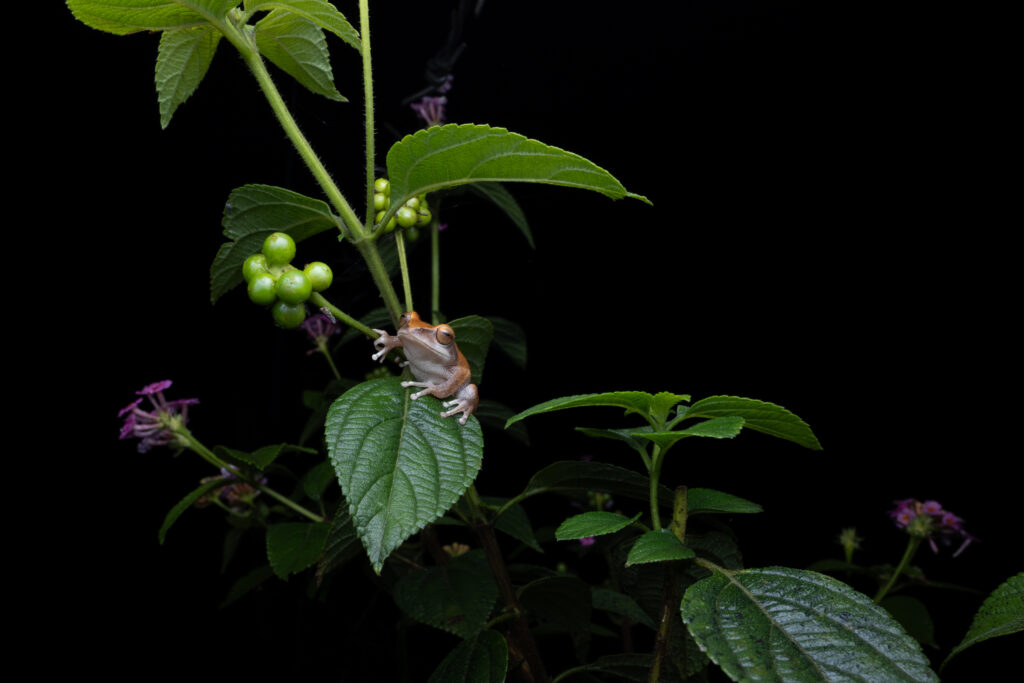
The story of Lost Amphibians of India is ultimately a story about observation. Conservation begins when we learn to notice what is small, hidden and easily ignored. A frog calling beside a stream may never command the same public attention as a tiger walking through a forest, but its survival is part of the same larger story.
Dr Biju’s expeditions remind us that hope in conservation is not passive. It means returning to the forest, listening through the rain, studying old records, following uncertain clues and refusing to declare a species lost without making every effort to find it. Somewhere in India’s forests, another forgotten amphibian may still be waiting. And as long as there are people willing to search, “lost” does not have to mean “gone forever.”
Sources: Lost! Amphibians of India, Amphibians of India Research, the original 2014 scientific study, and Amphibian Species of the World.
Taxonomic note: the species was moved from Hylarana to Indosylvirana in 2015. Some newer classifications once again treat it as Hylarana caesari, so both names may appear in current references.
Text and images by Dr Caesar Sengupta